
Deck & wood restoration
Your deck isn't done. It's just gray.
Wash, repair, recondition, stain, seal — the full five-step restoration that brings Quad Cities decks back from weathered to weekend-ready.
The process
Wash. Repair. Recondition. Stain. Seal.
Five steps, in order, every time. Skipping one is why most DIY stain jobs peel by the second summer.
Wash
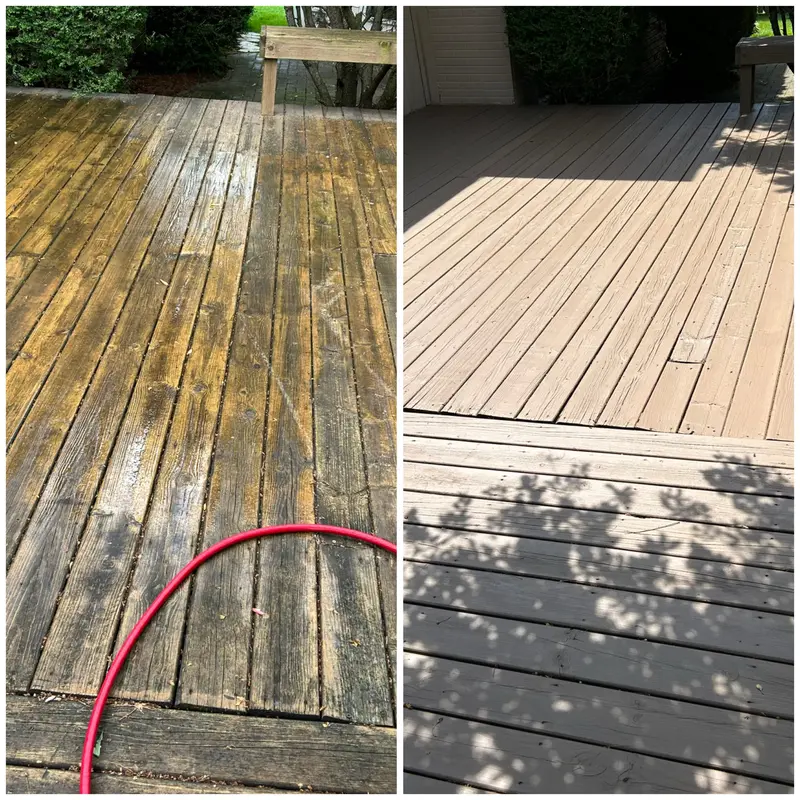
Low-pressure wash with a wood-safe cleaner lifts gray fibers, mildew, and old failing finish without furring the boards.
Repair
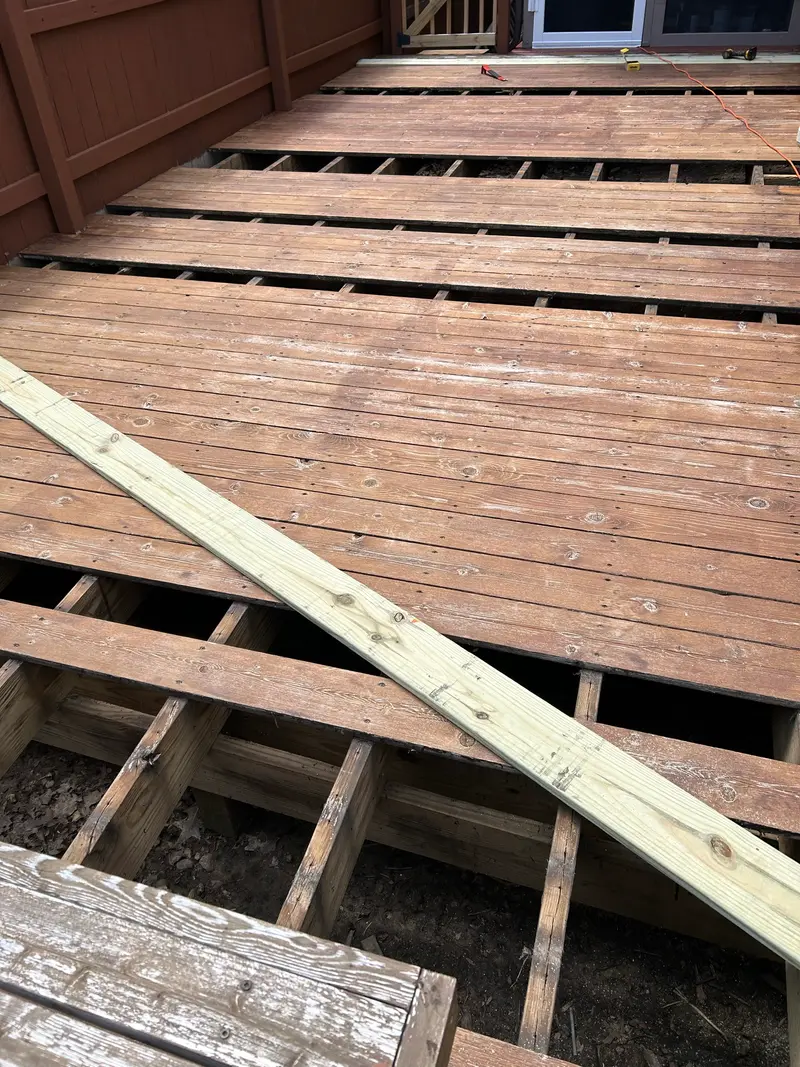
Loose boards refastened, popped nails replaced with screws, split boards swapped. A finish is only as good as the wood under it.
Recondition
A brightener rebalances the wood's pH and opens the grain so stain absorbs evenly instead of blotching.
Stain
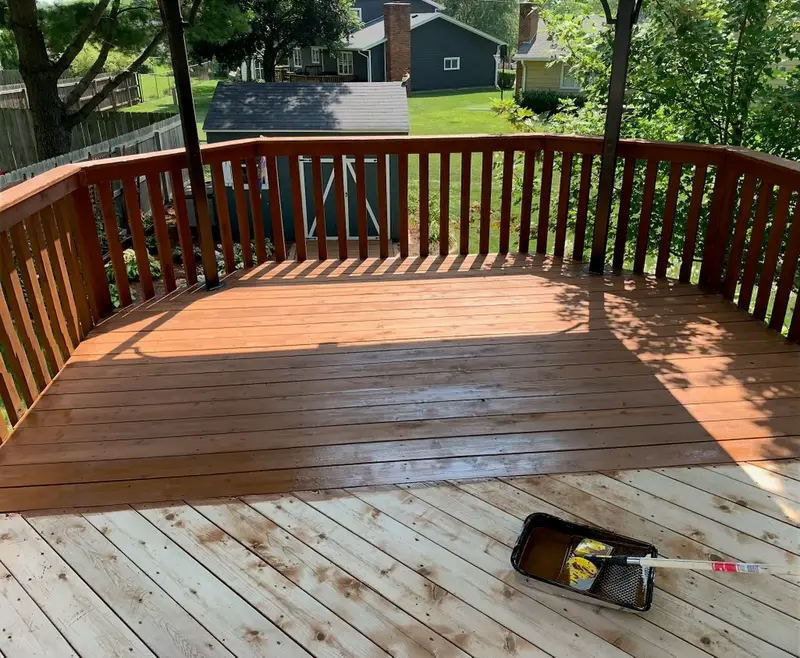
The stain you chose — transparent, semi-transparent, or solid — applied by hand to controlled coats. This is where the deck gets its color back.
Seal
A sealer locks out water and UV. Water beads instead of soaking in — that's the difference between resealing in a year and in four.


Know your boards
Wood types we restore
Each species weathers differently and takes stain differently. The prep and product change with the wood — the standard doesn't.
Pressure-treated pine
The Quad Cities default. Takes stain well once fully dry; the green-tinted new boards need a season before their first finish.
Cedar
Naturally rot-resistant and beautiful under a transparent or semi-transparent stain — worth restoring rather than replacing, almost every time.
Redwood & exotics
Dense, rich, and unforgiving of the wrong product. We test absorption first and choose penetrating finishes that won't film and peel.
Composite deck? A deep clean via power washing is usually all it needs — we'll tell you straight.
Stain vs. seal — what your deck actually needs
A sealer is a raincoat: it stops water, but the sun still grays the wood. Stain carries pigment, and pigment is sunscreen — the more of it, the longer the finish lasts. Transparent shows the most grain and needs the most frequent recoats; solid stain lasts longest and reads almost like paint. We'll show you samples on your own boards before you choose.
How long it lasts
Plan on resealing every 2–4 years in the Quad Cities. Full sun and south exposure push you to the short end; covered or shaded decks stretch to the long end. The pour-water test never lies: beads mean you're protected, soak-in means schedule us.


Deck restoration FAQ
Wood, weather, and honest answers
Seal alone if you love the current color and the wood is in good shape — it blocks water but adds little UV protection. Stain when the color has gone gray or patchy: pigment is what actually shields wood from sun. Most Quad Cities decks do best with a semi-transparent stain plus sealer.
In our climate — freeze-thaw winters and humid summers — figure every 2 to 4 years depending on sun exposure and product. The pour-water test tells you: if it soaks in instead of beading, it's time.
Usually, yes. Gray is dead surface fiber, not rot. Washing and brightening removes it and exposes sound wood underneath. If boards are actually rotted or structurally gone, we'll tell you what needs replacing before any stain goes down — honest about what can and can't be saved.
Pressure-treated pine and cedar make up most Quad Cities decks, and both restore beautifully. Redwood too. Composite decking doesn't take stain — but it does get deep-cleaned, and we'll tell you if that's all yours needs.
Late spring through early fall, with dry boards and moderate temps for staining. The schedule fills fast after the first warm weekend — get on it early.
Free quote
Get your deck quoted
A few photos and rough dimensions are enough for a solid estimate — we'll confirm on site before any work starts.
- No pressure, no obligation — a real quote from a local crew.
- Janitorial quotes start with a walkthrough of your building.
- Prefer to talk? Call and you'll reach a person, not a menu.
Bring the deck back before the season slips.
Spots fill fast once the weather turns. Get your quote in now.